
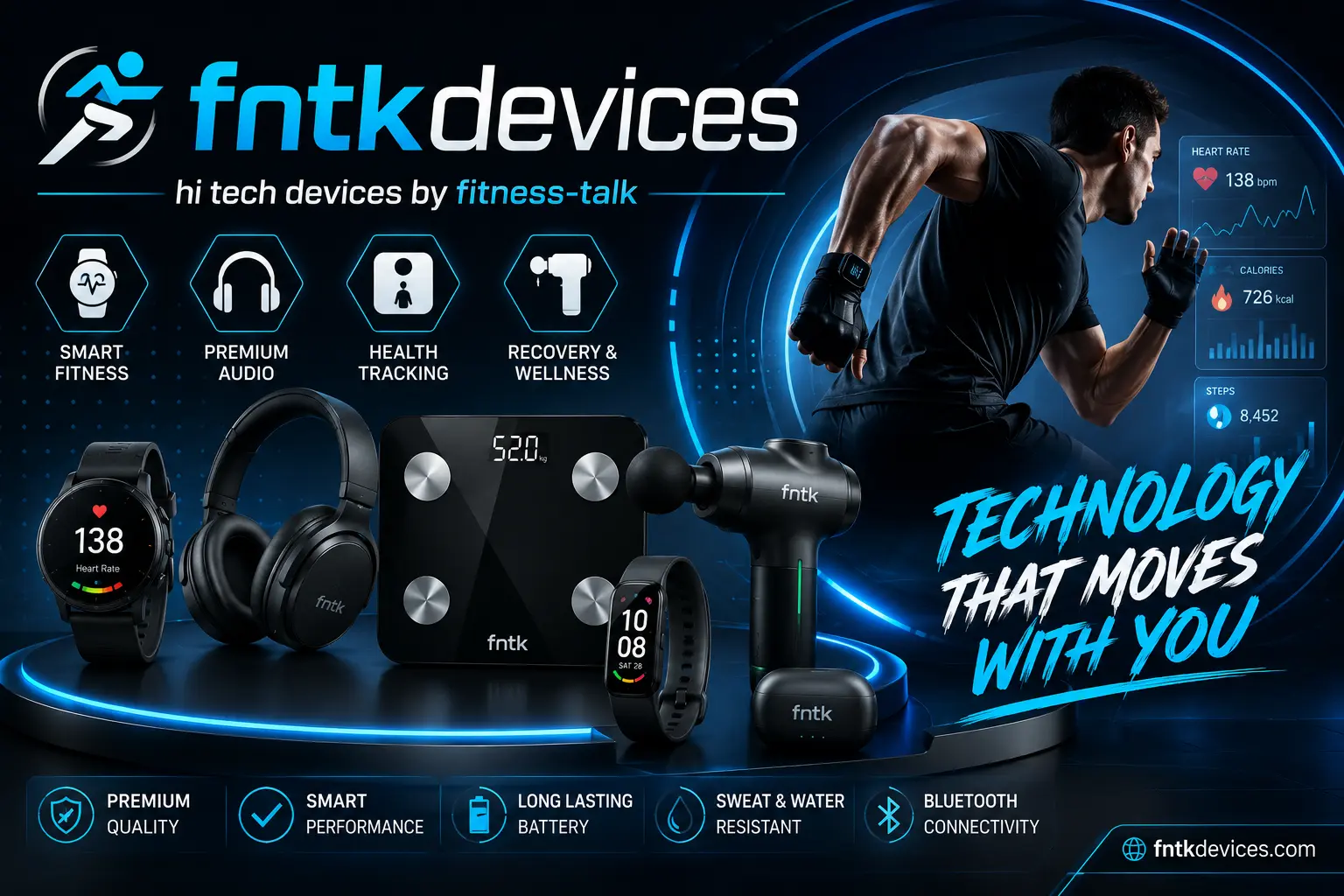
Fitness technology has moved far beyond basic pedometers and simple calorie counters. Today, smartwatches, wearable sensors, connected exercise equipment, recovery trackers, fitness apps, and AI-powered platforms can collect useful information about workouts, sleep, movement, and daily activity.
The search term fntkdevices hi tech devices by fitness-talk sits within this growing interest in smarter, more connected technology. Publicly indexed pages using the term generally discuss advanced devices, fitness tracking, wearable technology, biometric data, and technology designed to make health and exercise information easier to understand.
However, it is useful to make one distinction from the beginning. The phrase should not automatically be treated as the name of one specific fitness tracker or a clearly documented single product. It is better understood as a broader topic connecting FNTK Devices, Fitness-Talk, high-tech devices, and modern fitness technology.
That distinction matters because choosing useful fitness technology is not about buying the device with the longest feature list. It is about finding technology that collects information you actually need and presents it in a way that helps you make better decisions.
What Are Fntkdevices Hi Tech Devices by Fitness-Talk?
Fntkdevices hi tech devices by Fitness-Talk can be understood as technology-focused fitness devices and concepts designed around tracking, connectivity, smarter data interpretation, and personal performance monitoring.
Modern fitness technology may include:
- Smartwatches
- Fitness bands
- Heart rate monitors
- GPS sports watches
- Smart rings
- Connected exercise equipment
- Sleep and recovery trackers
- Smart scales
- Workout sensors
- Fitness applications
- AI-powered coaching tools
- Virtual and augmented reality fitness systems
These technologies may collect information such as movement, exercise duration, heart rate, training intensity, sleep patterns, distance traveled, workout frequency, or recovery-related indicators.
The real value comes from what happens after the information is collected.
A basic device records numbers. A more advanced fitness system organizes those numbers into patterns, trends, reminders, workout summaries, and recommendations that are easier for the user to understand.
Why High-Tech Fitness Devices Have Become Popular
Fitness technology has become more useful because people increasingly want measurable information about their daily routines.
Someone running outdoors may want distance and pace data. A gym user may want workout records. A cyclist may care about GPS tracking and heart rate zones. Someone trying to improve general wellness may be more interested in sleep consistency, daily movement, and recovery.
The attraction of high-tech fitness devices can therefore be summarized in one idea: visibility.
They can help users see patterns that would otherwise be difficult to notice.
For example, a person might discover that:
- Their workout frequency has decreased
- Their sleeping schedule changes significantly on weekends
- Their running pace improves at a particular heart rate range
- Their daily movement drops during busy workdays
- They are increasing training volume too quickly
- Their recovery routine is inconsistent
The device itself does not automatically improve fitness. Instead, it can make behavior easier to measure.
How Modern Fitness Technology Works
Most smart fitness devices combine several technologies rather than relying on one sensor.
Motion Sensors
Accelerometers and gyroscopes can detect movement, direction, acceleration, and orientation.
These sensors are commonly used for functions such as:
- Step detection
- Movement tracking
- Exercise recognition
- Activity classification
- Wrist movement detection
- Workout analysis
They help devices understand whether the user is walking, running, resting, or performing certain types of movement.
Optical Heart Rate Sensors
Many wearable devices use optical sensors on the skin to estimate heart rate.
The information may then be used to display:
- Current heart rate
- Average workout heart rate
- Heart rate zones
- Resting heart rate trends
- Exercise intensity
Users should still remember that consumer wearable readings are estimates rather than replacements for professional medical assessment.
GPS Technology
GPS is particularly useful for outdoor activities.
It can help track:
- Running routes
- Cycling routes
- Distance
- Speed
- Pace
- Elevation-related movement
- Location history
Dedicated GPS watches are especially popular among runners, cyclists, hikers, and outdoor athletes.
Connected Applications
The wearable is often only one part of the system.
A connected mobile application may store historical information and convert individual readings into weekly or monthly trends.
This makes it easier to compare:
- Current performance with previous workouts
- Activity levels across different days
- Sleep patterns over several weeks
- Training consistency
- Personal goals and actual progress
AI and Data Analysis
Artificial intelligence is increasingly being integrated into fitness applications and connected devices.
Instead of displaying only raw information, software can identify trends and personalize recommendations based on previous activity.
AI may support functions such as:
- Workout suggestions
- Training plan adjustments
- Activity recognition
- Recovery recommendations
- Exercise summaries
- Goal setting
- Pattern detection
The effectiveness of these features depends heavily on the quality of the collected data and the design of the software.
Main Types of Fntkdevices and Smart Fitness Technology
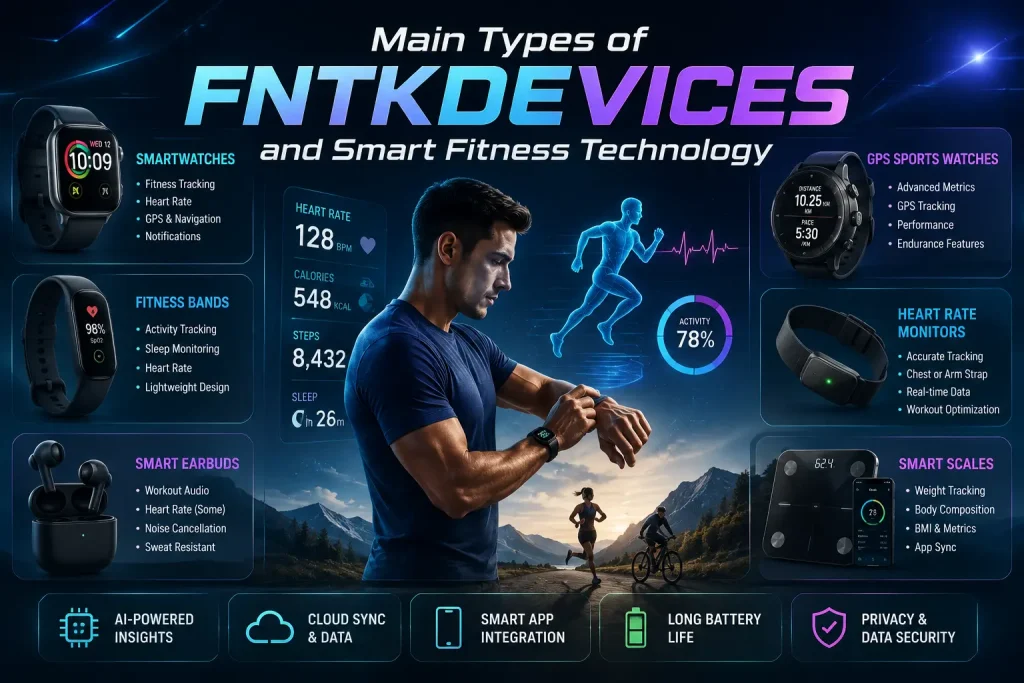
Different devices serve different purposes. Understanding the categories can prevent users from paying for functions they do not need.
Smartwatches
Smartwatches combine fitness features with everyday digital functions.
Typical capabilities can include:
- Activity tracking
- Exercise modes
- Heart rate monitoring
- GPS
- Notifications
- Music controls
- Sleep tracking
- Smartphone integration
They are suitable for users who want one device for both daily technology and fitness.
Fitness Trackers
Fitness bands usually concentrate more directly on activity monitoring.
They may track:
- Steps
- Distance
- Daily activity
- Exercise sessions
- Sleep
- Heart rate
- Calories estimated by the device
They can be a practical choice for people who prefer a smaller and simpler wearable.
Smart Rings
Smart rings provide another approach to wearable technology.
Because they are compact, they may appeal to users who do not want to wear a watch throughout the day or night.
Depending on the model, smart rings may focus strongly on sleep, activity, resting metrics, and recovery trends.
Chest Strap Heart Rate Monitors
Chest straps are commonly used by people who place greater importance on heart rate monitoring during structured workouts.
They are popular in:
- Running
- Cycling
- Interval training
- Endurance sports
- Cardio workouts
Unlike general-purpose smartwatches, they are usually designed around a narrower set of performance metrics.
Smart Scales
Connected scales can automatically transfer measurements into an application.
Depending on the model, the device may estimate several body-related metrics in addition to body weight.
These estimates should be interpreted as trends rather than perfect measurements because consumer devices can vary in accuracy.
Connected Gym Equipment
High-tech fitness is also moving beyond wearables.
Connected treadmills, bikes, rowing machines, strength equipment, and home workout systems may provide:
- Digital resistance controls
- Workout programs
- Performance dashboards
- Virtual classes
- Leaderboards
- Progress tracking
- Automatic workout history
This creates a more integrated training environment.
Recovery Technology
Recovery-focused technology has become another important part of the fitness ecosystem.
Products and applications in this category may monitor sleep patterns, resting metrics, training load, or workout history to help users think more carefully about recovery between sessions.
Fntkdevices Hi Tech Devices vs Traditional Fitness Trackers
The difference between traditional and modern fitness technology is not simply the number of sensors.
The biggest difference is often how information is organized and presented.
| Feature | Traditional Fitness Tracker | Modern High-Tech Fitness Device |
|---|---|---|
| Step Tracking | Common | Common |
| Heart Rate Monitoring | Basic or moderate | Often more detailed |
| GPS | Limited on some models | Common on sports-focused models |
| Sleep Tracking | Basic | More detailed trend analysis |
| Smartphone Connection | Basic syncing | Deeper app ecosystem integration |
| Workout Recognition | Limited | More activity modes and automation |
| AI Features | Rare | Increasingly common |
| Recovery Insights | Limited | Available on many newer platforms |
| Smart Coaching | Minimal | Possible through connected software |
| Data Trends | Basic charts | Longer-term analysis and recommendations |
| Connected Equipment Support | Rare | Increasingly available |
A newer device is not automatically better.
Someone who only wants step tracking may gain little from paying significantly more for advanced training features.
Important Features to Look For
The best device depends on what the user wants to measure.
Tracking Accuracy
A device should provide reasonably consistent measurements for the activity it is being purchased to track.
A runner may prioritize GPS and pace information, while someone focused on everyday wellness may care more about activity and sleep tracking.
Battery Life
Battery life affects how consistently a device can be used.
Advanced features such as continuous monitoring, bright displays, GPS, and frequent syncing can increase battery consumption.
A device with slightly fewer features but much better battery life may be more useful for certain users.
Comfort
Wearable fitness technology only works when people actually wear it.
Consider:
- Weight
- Strap material
- Device thickness
- Wrist fit
- Skin comfort
- Suitability for overnight wear
Comfort becomes especially important when sleep tracking is a major goal.
Water Resistance
People who swim or frequently train outdoors should check the specific water-resistance rating rather than assuming every fitness wearable is designed for swimming.
Application Quality
The mobile application can be just as important as the hardware.
A good platform should make important information easy to find instead of overwhelming the user with graphs.
Look for:
- Clear dashboards
- Historical data
- Workout summaries
- Goal tracking
- Simple navigation
- Reliable syncing
Compatibility
Before choosing a device, confirm that it works properly with your smartphone and the applications you already use.
Some devices provide stronger functionality within particular software ecosystems.
Data Export
Advanced athletes or users who enjoy analyzing their own information may prefer a platform that allows data to be shared or exported.
Privacy Controls
Fitness devices can collect sensitive personal information about routines, movement, sleep, location, and health-related metrics.
Users should understand:
- What information is collected
- Whether location tracking can be disabled
- Which applications receive the data
- Whether cloud storage is used
- How account information can be deleted
- Which permissions are enabled
Privacy should be part of the purchasing decision, not something considered only after setup.
Choosing a Device Based on Your Fitness Goal
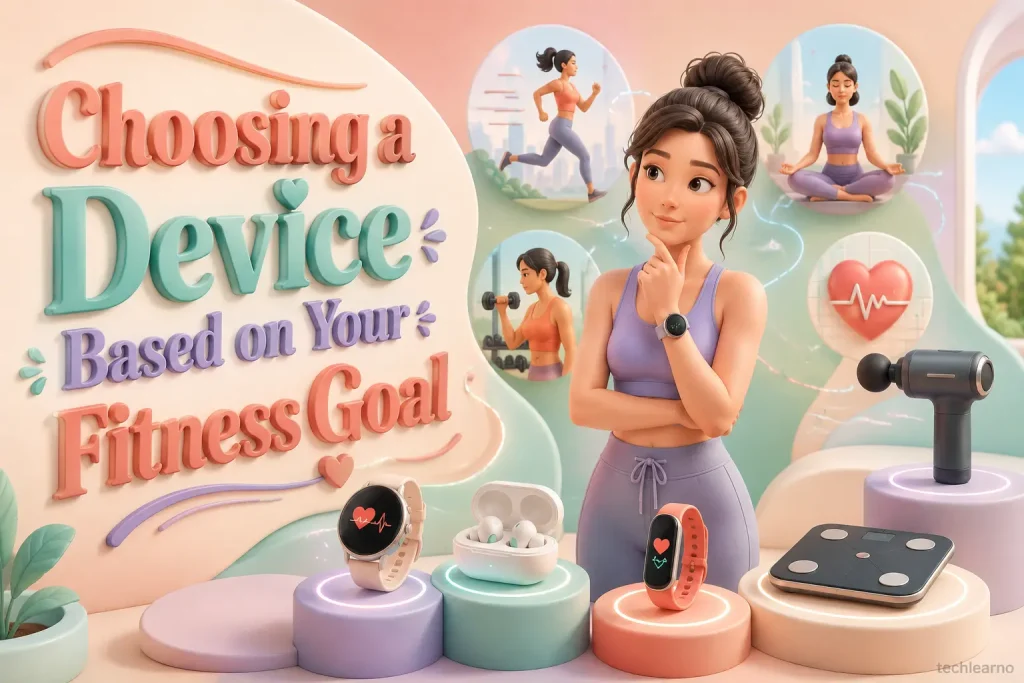
The best smart device depends heavily on the user.
For Everyday Activity
Look for:
- Comfortable design
- Long battery life
- Step tracking
- Basic workouts
- Heart rate monitoring
- Sleep tracking
A complicated professional sports watch may be unnecessary.
For Running
Useful features can include:
- Reliable GPS
- Pace tracking
- Distance
- Heart rate zones
- Interval workouts
- Route tracking
- Training history
For Strength Training
Look for a system that makes workout logging easy.
Some users may value:
- Set tracking
- Exercise history
- Rest timers
- Workout plans
- Connected strength equipment
- Training volume records
For Cycling
Cyclists may prioritize:
- GPS
- Heart rate sensor compatibility
- Speed information
- Route navigation
- Long battery life
- External sensor support
For Sleep and Recovery
Comfort and overnight battery performance become particularly important.
Users may prefer technology that clearly shows long-term sleep and recovery trends instead of focusing mainly on workout features.
Benefits of Smart Fitness Devices
When used properly, fitness technology can provide several practical benefits.
Better Awareness
People often underestimate or overestimate how active they are.
Tracking provides a more structured record.
Improved Consistency
Goals, reminders, streaks, and workout records can encourage some users to maintain a routine.
Easier Progress Tracking
Instead of relying only on memory, users can compare recent workouts with earlier sessions.
More Personalized Training
Devices that understand previous activity can provide more relevant information than generic fitness recommendations.
Convenient Record Keeping
Training logs, routes, daily activity, and workout history can be stored automatically.
Better Understanding of Habits
Fitness devices can connect exercise with broader lifestyle patterns such as sleep, activity, and recovery.
Limitations Users Should Understand
One of the biggest content gaps in discussions of high-tech fitness devices is the assumption that more data always produces better decisions.
It does not.
Consumer Devices Are Not Perfect
Sensor readings can be influenced by factors such as:
- Device fit
- Wrist movement
- Skin contact
- Exercise type
- GPS conditions
- Sensor quality
- Software algorithms
Individual measurements should therefore be interpreted with reasonable caution.
Calorie Estimates Are Estimates
Calorie expenditure is particularly difficult for consumer devices to calculate perfectly.
The number can be useful for general comparisons, but users should avoid treating it as an exact measurement.
Too Much Data Can Become Distracting
People can become overly focused on hitting digital targets.
A lower sleep score does not automatically mean the entire day will be poor, and one unusual workout reading does not necessarily indicate a serious problem.
Trends are generally more useful than isolated numbers.
Technology Cannot Replace Professional Guidance
Fitness devices can provide information, but they cannot replace qualified medical professionals, physiotherapists, or experienced coaches when professional assessment is required.
Fitness Data: Numbers vs Useful Insights
This is where the idea behind fntkdevices hi tech devices by Fitness-Talk becomes particularly relevant.
Fitness technology should reduce confusion, not create more of it.
Imagine two devices.
Device A tells you:
- 8,642 steps
- 71 bpm average resting heart rate
- 6 hours 48 minutes sleep
- 420 estimated active calories
Device B shows the same information but also organizes it into understandable weekly patterns.
The second experience is more useful because it helps the user answer questions such as:
- Am I becoming more active?
- Is my workout routine consistent?
- Has my sleep schedule changed?
- Am I training more than usual?
- Which habits appear repeatedly?
Raw data becomes valuable only when users can interpret it.
Smart Fitness Ecosystems Matter More Than Individual Gadgets
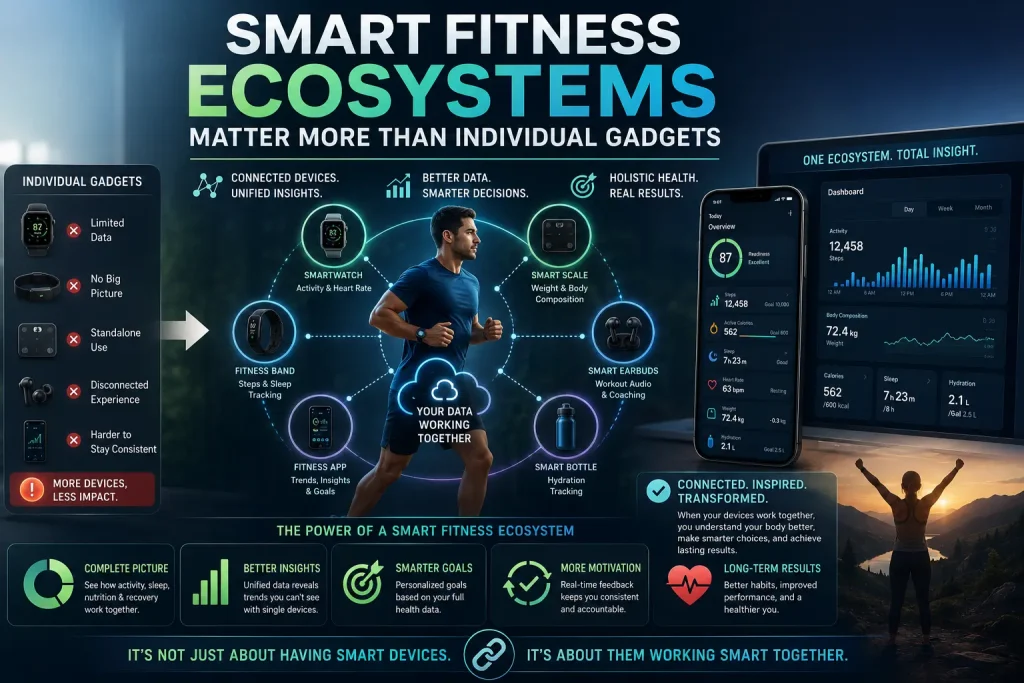
Buying isolated devices can create unnecessary complexity.
A smartwatch from one ecosystem, a smart scale from another, and a training application from a third may produce several separate dashboards.
A connected ecosystem can make tracking simpler by bringing information together.
Before buying additional technology, ask:
- Will the devices sync?
- Can the data appear in one application?
- Does the platform support the fitness apps I use?
- Will I need multiple subscriptions?
- Can I switch devices later without losing years of information?
These questions can matter more than a minor difference in specifications.
Subscription Costs and Hidden Expenses
The purchase price is not always the complete cost.
Some high-tech fitness platforms offer premium functions through monthly or annual memberships.
Before buying, check whether important functions require:
- A premium application plan
- Cloud storage
- Coaching subscriptions
- Workout class memberships
- Advanced analytics subscriptions
A lower-priced device with a long-term subscription can eventually cost more than a more expensive device that includes the important features without recurring payments.
How to Use Fitness Technology Effectively
Smart fitness technology becomes more useful when users develop a simple routine around it.
Start With One Goal
Do not try to optimize everything immediately.
Choose one priority, such as:
- Walking more
- Running consistently
- Improving workout frequency
- Tracking sleep
- Recording strength sessions
Establish a Baseline
Use the device for several days or weeks before making major conclusions.
This provides a clearer picture of your normal activity.
Review Trends Weekly
Checking every number several times each day can become distracting.
Weekly trends often provide better context.
Adjust Gradually
If the data identifies an inconsistent routine, make manageable changes rather than completely rebuilding your lifestyle overnight.
Keep the Device Updated
Software and firmware updates may improve compatibility, functionality, security, and device performance.
Clean Wearable Sensors
Sweat, lotion, dirt, and loose fitting can affect sensor contact.
Follow the manufacturer’s cleaning and usage instructions.
Privacy and Security of Fitness Devices
High-tech fitness devices are also data-collection devices.
Depending on their features, they may store information related to:
- Location
- Exercise routines
- Sleep schedules
- Account identity
- Connected applications
- Daily habits
- Heart rate
- Device usage
Users should review privacy settings during setup instead of accepting every default permission automatically.
Good habits include:
- Using a strong account password
- Enabling two-factor authentication when available
- Limiting unnecessary app permissions
- Reviewing connected third-party services
- Removing services you no longer use
- Installing official software updates
Convenience and privacy should work together.
Future of High-Tech Fitness Devices
The next stage of fitness technology is likely to focus less on collecting additional numbers and more on improving interpretation.
Many users already have access to large amounts of data. The challenge is making that information meaningful.
Future developments may increasingly focus on:
More Personalized AI
Instead of generic advice, software may adapt recommendations according to individual training history and habits.
Smaller Sensors
Wearable sensors may continue becoming lighter and less noticeable.
Smarter Clothing
Sensors integrated into clothing and footwear may create additional ways to measure movement.
Improved Connected Gyms
Exercise equipment may automatically recognize users, load preferences, record workouts, and synchronize sessions.
More Context-Aware Recommendations
Future systems may combine several metrics instead of evaluating each measurement separately.
The most useful innovation will not necessarily be another sensor. It may be software that explains existing information more clearly.
Common Mistakes When Buying Smart Fitness Technology
Consumers often focus heavily on specifications and forget everyday usability.
Avoid these mistakes:
- Buying features you will never use
- Ignoring battery life
- Choosing a device that feels uncomfortable
- Failing to check smartphone compatibility
- Assuming every health metric is perfectly accurate
- Ignoring subscription costs
- Overlooking privacy settings
- Comparing devices only by sensor count
- Switching ecosystems without checking data migration options
- Treating wearable measurements as medical diagnoses
The right device should simplify your routine rather than adding another complicated screen to check.
Frequently Asked Questions
What does fntkdevices hi tech devices by Fitness-Talk mean?
The phrase generally refers to online content surrounding FNTK Devices, Fitness-Talk, advanced technology, smart fitness devices, wearable tracking, and connected fitness tools. Publicly indexed pages use the wording in discussions related to modern fitness technology rather than clearly establishing it as one single consumer fitness product.
Are Fntkdevices the same as fitness trackers?
Not necessarily. The broader concept can include fitness trackers, smartwatches, smart rings, connected gym equipment, sensors, fitness applications, and other technology-related devices.
What is the most important feature in a fitness device?
There is no universal best feature. GPS may matter most to a runner, while battery life and sleep tracking may matter more to someone monitoring general wellness.
Can smart fitness devices improve workouts?
They can help users monitor workouts, maintain records, identify patterns, and track goals. Results still depend on training habits, consistency, recovery, nutrition, and how the information is used.
Are fitness tracker readings completely accurate?
Consumer fitness devices provide useful estimates, but readings can vary based on sensor quality, device fit, movement, environment, and measurement method.
Are expensive fitness devices always better?
No. A more expensive device may provide advanced functions that many users never need. The best value comes from matching features to specific goals.
What devices are useful for runners?
Runners commonly benefit from GPS, distance tracking, pace information, workout history, heart rate monitoring, and sufficient battery life.
Conclusion
Fntkdevices hi tech devices by Fitness-Talk represents a broader shift in the way people think about fitness technology. The most useful modern devices are no longer limited to counting steps. Wearables, smartwatches, connected equipment, biometric sensors, fitness applications, and intelligent software can organize activity information and make long-term patterns easier to understand.
But advanced technology should serve a clear purpose.
More sensors do not automatically mean better fitness. More charts do not automatically create better decisions, and a premium device does not automatically produce better results.
Start with the goal. Decide what information is genuinely useful. Compare compatibility, comfort, battery life, privacy, accuracy, software quality, and long-term cost. Then choose technology that fits naturally into your routine.
That is the real value of fntkdevices hi tech devices by Fitness-Talk: not simply adding technology to fitness, but using the right technology to make fitness information more understandable, practical, and useful.
