
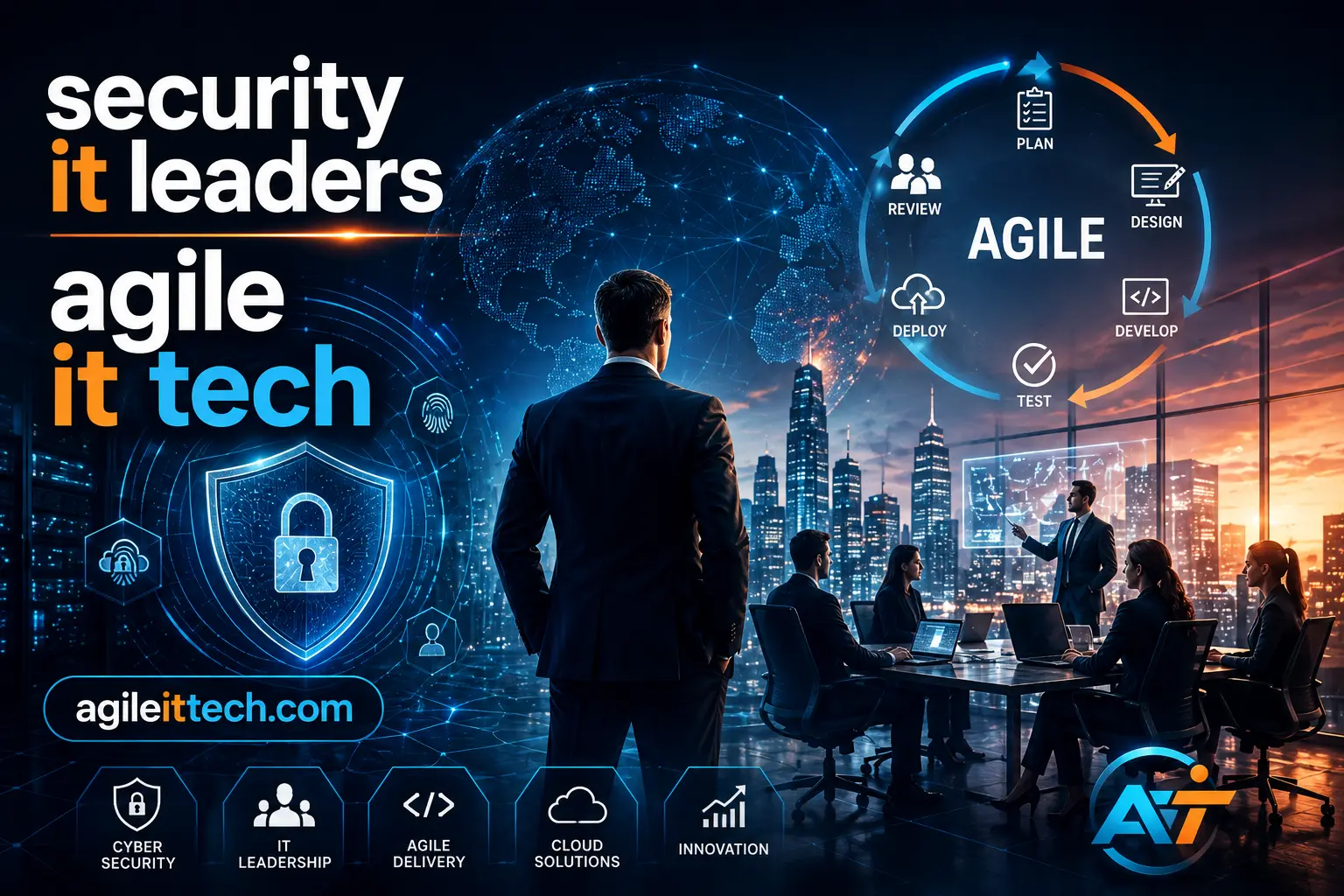
Cybersecurity is no longer a responsibility that belongs only to a small technical team working behind the scenes. Modern organizations depend on connected applications, cloud platforms, remote access, digital data, and constantly changing technology. As a result, security IT leaders need a combination of technical knowledge, risk awareness, communication skills, and the ability to respond quickly when threats change.
People searching for security it leaders agile it tech agileittech.com are often trying to understand the connection between cybersecurity skills, IT leadership, agile technology practices, and professional technology training. These areas increasingly overlap because businesses need security professionals who can protect systems without slowing down innovation.
Agile approaches can make cybersecurity more responsive by integrating security activities throughout technology and development processes instead of treating security as a final checkpoint.
This guide explains what modern security IT leadership involves, the skills professionals need, how agile security works, and how cybersecurity training can support long-term career development.
What Are Security IT Leaders?
Security IT leaders are professionals who help organizations protect their information systems, digital infrastructure, applications, networks, and sensitive data.
Their responsibilities can extend far beyond installing security software. Depending on the organization and job level, they may be involved in:
- Cybersecurity strategy
- Network security
- Cloud security
- Threat detection
- Vulnerability management
- Security operations
- Incident response
- Identity and access management
- Data protection
- Risk assessment
- Security policies
- Compliance
- Employee security awareness
- Business continuity
- Technology governance
A strong security leader understands both the technical environment and the business impact of security decisions.
For example, discovering a vulnerability is only one part of the job. A security professional may also need to determine how serious the vulnerability is, which systems are affected, how quickly remediation is required, and how the issue should be communicated to management.
Why Security Leadership Matters in Modern IT
Technology environments have become more distributed and interconnected. Businesses may operate websites, APIs, cloud applications, databases, mobile applications, remote-access systems, SaaS tools, and third-party integrations at the same time.
Each additional technology can introduce potential security risks.
Security leadership helps organizations understand those risks and decide where protection should be prioritized.
Effective IT security leadership can support:
Better Risk Management
Not every security issue has the same business impact.
Security teams need to identify the threats that create the greatest risk and prioritize their resources accordingly.
Faster Security Decisions
Security incidents can require immediate decisions.
A capable security leader understands when an issue can follow a normal remediation process and when it requires urgent containment or escalation.
Stronger Collaboration
Cybersecurity affects developers, infrastructure teams, cloud engineers, business managers, employees, vendors, and executives.
Security leaders frequently act as a bridge between these groups.
More Secure Technology Adoption
Organizations regularly introduce new applications, cloud platforms, automation systems, and digital services.
Security professionals help evaluate how those technologies can be implemented while maintaining appropriate security controls.
What Is Agile Security?
Agile security is an approach that integrates security into ongoing development and IT processes rather than leaving security testing until the end.
Traditional workflows sometimes follow a sequence such as:
Planning → Development → Testing → Security Review → Release
An agile security approach moves security activities throughout the process:
Planning → Security Requirements → Development → Continuous Testing → Risk Review → Release → Monitoring → Improvement
Security therefore becomes an ongoing responsibility.
This approach is also closely connected with concepts such as DevSecOps, continuous security testing, security automation, and shift-left security.
Traditional Security vs Agile Security
| Area | Traditional Approach | Agile Security Approach |
|---|---|---|
| Security involvement | Often later in the project | Begins early |
| Testing | Periodic | Continuous |
| Team structure | Security may work separately | Cross-functional collaboration |
| Risk review | Scheduled assessments | Continuous evaluation |
| Response to change | Can be slower | Designed for faster adaptation |
| Development integration | Limited | Security integrated into workflows |
| Vulnerability handling | Often handled in batches | Prioritized continuously |
| Automation | May be limited | Frequently encouraged |
| Feedback | Longer feedback cycles | Short feedback cycles |
| Improvement | Periodic | Continuous |
Neither approach means security controls should be rushed. Agile security focuses on making security part of everyday technology work rather than treating it as an isolated activity.
Core Skills Security IT Leaders Need
Successful cybersecurity leadership requires more than one technical specialization.
Cybersecurity Fundamentals
Professionals should understand fundamental concepts such as:
- Confidentiality
- Integrity
- Availability
- Authentication
- Authorization
- Encryption
- Security controls
- Attack surfaces
- Vulnerabilities
- Threats
- Risk
These concepts create a foundation for more advanced security knowledge.
Network Security
Networks connect users, systems, applications, servers, and cloud environments.
Important areas include:
- TCP/IP fundamentals
- Firewalls
- VPNs
- Network segmentation
- Ports and protocols
- Intrusion detection
- Intrusion prevention
- DNS security
- Secure network configuration
Understanding network traffic can also help security professionals recognize suspicious activity.
Identity and Access Management
Many security incidents involve credentials or unauthorized access.
Security professionals should understand:
- Authentication
- Authorization
- Multi-factor authentication
- Password policies
- Role-based access control
- Privileged access
- Least privilege
- Account lifecycle management
The goal is to ensure that users receive the access they need without unnecessary permissions.
Vulnerability Management
Vulnerability management involves identifying, evaluating, prioritizing, and addressing weaknesses in technology systems.
The process may include:
- Asset identification
- Vulnerability discovery
- Risk assessment
- Prioritization
- Remediation
- Verification
- Continuous monitoring
Security leaders should understand that a long vulnerability list does not automatically identify the most important business risks.
Incident Response
Organizations also need plans for situations where preventative controls are not enough.
A typical incident response process may involve:
- Preparation
- Detection
- Analysis
- Containment
- Eradication
- Recovery
- Documentation
- Lessons learned
Clear communication becomes especially important during serious security incidents.
Security Operations and Threat Monitoring
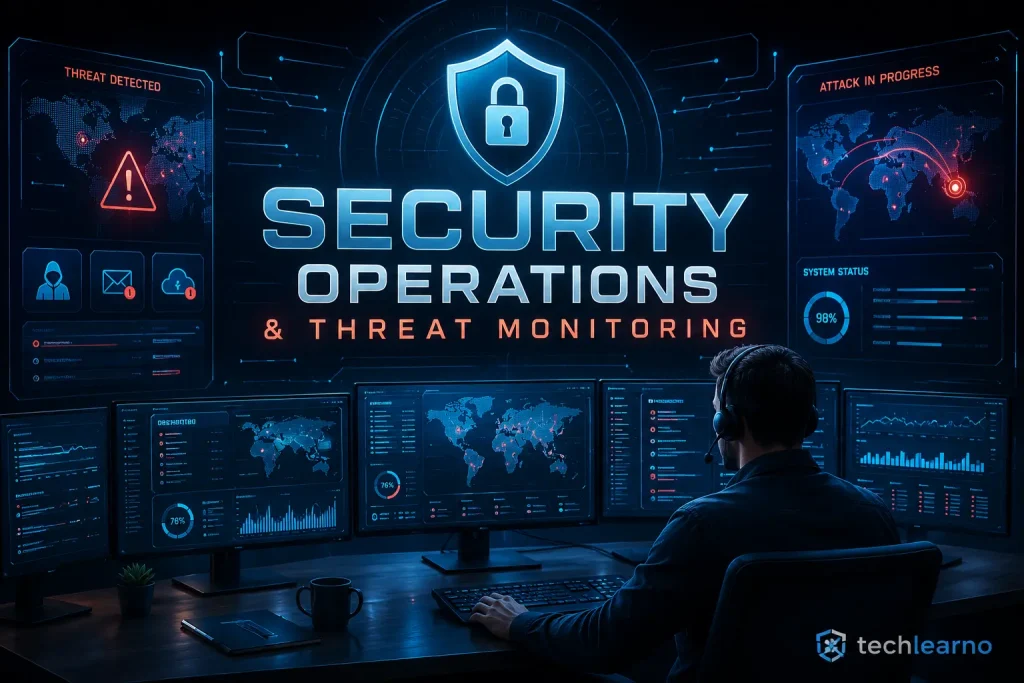
Security operations focuses on continuously identifying and responding to suspicious behavior.
Security professionals may monitor information from:
- Servers
- Endpoints
- Firewalls
- Applications
- Cloud platforms
- Authentication systems
- Network devices
- Security monitoring platforms
Security teams look for indicators that could represent unauthorized activity.
Examples include:
- Repeated failed login attempts
- Unexpected administrative access
- Unusual network traffic
- Malware alerts
- Suspicious file changes
- Unknown devices
- Abnormal account activity
The goal is not simply collecting alerts. Teams need processes for determining which alerts require investigation.
Cloud Security Is Becoming an Essential Skill
Modern IT professionals increasingly work with cloud environments.
Cloud security requires understanding how security responsibilities change when infrastructure and services are hosted through cloud platforms.
Important cloud security areas include:
- Identity management
- Access permissions
- Secure configuration
- Encryption
- Data protection
- Logging
- Monitoring
- Backup
- Network controls
- Misconfiguration prevention
One common challenge is configuration.
A powerful cloud security service provides limited protection if permissions, storage settings, identities, or network rules are configured incorrectly.
Security professionals therefore need both security knowledge and an understanding of how cloud environments operate.
How DevSecOps Connects Security and Agile IT
DevSecOps combines development, security, and operations practices.
The basic idea is simple: security should participate throughout the software delivery lifecycle.
Instead of developers creating an application and passing it to security at the end, teams collaborate from the beginning.
Security activities can include:
- Security requirements
- Secure coding
- Code scanning
- Dependency checking
- Configuration reviews
- Automated security testing
- Vulnerability scanning
- Access control
- Logging
- Deployment security
- Continuous monitoring
Automation can make many of these activities easier to repeat consistently.
However, automation does not replace cybersecurity professionals. Tools generate information, while professionals still need to interpret risk and decide what action should be taken.
The Role of Risk Management in Cybersecurity Leadership
Strong cybersecurity is not based on trying to eliminate every possible risk.
That is rarely realistic.
Security leaders instead need to identify important assets, understand possible threats, evaluate vulnerabilities, and determine the potential impact on the organization.
A simplified risk assessment considers questions such as:
- What are we protecting?
- What could threaten it?
- What weaknesses currently exist?
- How likely is exploitation?
- What would happen if exploitation occurred?
- What controls already exist?
- What additional controls are justified?
This risk-based approach helps organizations focus resources where they can provide the greatest protection.
Technical Skills vs Leadership Skills
Technical expertise is important, but moving into security leadership requires additional abilities.
| Technical Skills | Leadership Skills |
|---|---|
| Network security | Communication |
| Cloud security | Decision-making |
| Vulnerability analysis | Risk prioritization |
| Security monitoring | Team management |
| Incident response | Stakeholder communication |
| Access management | Strategic planning |
| Security testing | Conflict resolution |
| Threat analysis | Business understanding |
| Secure configuration | Resource planning |
| Security tools | Policy development |
An experienced cybersecurity professional may know exactly how a vulnerability works. A security leader must also explain why that vulnerability matters to someone who does not have a technical background.
Why Communication Is a Critical Cybersecurity Skill
Security professionals frequently communicate with people who have very different levels of technical knowledge.
A technical team might need information about:
- A vulnerable software component
- An insecure API
- Incorrect access permissions
- Network configuration
- Application logs
Executives may need a completely different explanation covering:
- Business impact
- Financial exposure
- Operational disruption
- Compliance concerns
- Remediation priorities
Effective security leaders adjust their communication without changing the underlying facts.
Building a Cybersecurity Career Through Practical Learning
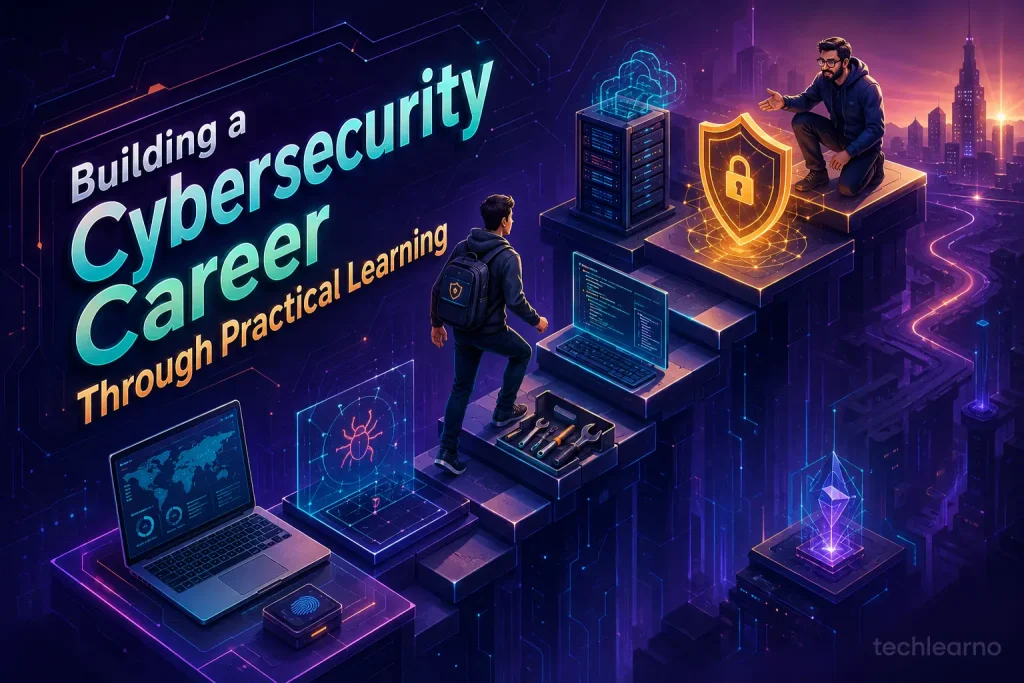
Cybersecurity contains many different career paths.
Beginners do not need to master everything immediately.
A structured learning path can make the field easier to approach.
Start With IT Fundamentals
Learn:
- Computer systems
- Operating systems
- Networking
- Databases
- Web technologies
- Basic cloud concepts
Build Security Fundamentals
Then study:
- Common cyber threats
- Authentication
- Authorization
- Encryption
- Firewalls
- Network security
- Vulnerabilities
- Malware
- Security policies
Develop Practical Skills
Practical exercises can help connect theoretical knowledge to real technical situations.
Useful areas include:
- Network analysis
- Vulnerability assessment
- Log analysis
- Security configuration
- Threat identification
- Incident investigation
- Access-control testing
Choose a Specialization
After building a foundation, professionals may focus on areas such as:
- Security operations
- Penetration testing
- Cloud security
- Application security
- Governance and compliance
- Identity security
- Incident response
- Security engineering
Specialization usually becomes easier after understanding the broader cybersecurity landscape.
Cyber Security Training and Agile IT Tech
Agile IT Tech includes Cyber Security within its technology training portfolio and describes its cybersecurity offering around protecting systems and data through practical instruction and attack-simulation experience.
For someone researching security it leaders agile it tech agileittech.com, the important consideration should be how effectively any training option supports both foundational knowledge and practical understanding.
Useful cybersecurity learning should help students understand concepts rather than simply memorize terminology.
Students should aim to develop confidence in areas such as:
- Networking
- Security fundamentals
- Threat identification
- Vulnerability concepts
- Access controls
- Security monitoring
- Incident response
- Cloud security
- Risk management
- Practical troubleshooting
A strong learning foundation can later support specialization and career growth.
How to Evaluate Cybersecurity Training
Before choosing cybersecurity training, learners should evaluate more than the course name.
Review the Curriculum
Look for coverage of fundamental and practical cybersecurity topics.
Check the Learning Approach
Cybersecurity is highly technical, so practical exercises can help reinforce theoretical concepts.
Understand the Prerequisites
Some programs are beginner friendly, while others expect previous networking, programming, cloud, or IT experience.
Consider Your Career Goal
Someone interested in security operations may need a different learning path from someone focused on application security or governance.
Look for Skill Development
The goal should be building usable knowledge rather than simply finishing modules.
Common Cybersecurity Career Paths
Cybersecurity professionals can move into several roles.
Security Analyst
Security analysts monitor systems, investigate suspicious activity, assess vulnerabilities, and help respond to incidents.
SOC Analyst
A Security Operations Center analyst focuses heavily on alerts, logs, threat detection, and incident investigation.
Security Engineer
Security engineers design and maintain technical security controls.
Cloud Security Specialist
These professionals focus on protecting cloud infrastructure, identities, applications, configurations, and data.
Application Security Specialist
Application security professionals help identify and reduce security weaknesses in software.
Penetration Tester
Penetration testers simulate authorized attacks to identify vulnerabilities before malicious attackers find them.
Incident Response Specialist
Incident responders investigate cybersecurity incidents and help organizations contain and recover from attacks.
Security Manager
Security managers coordinate teams, priorities, projects, policies, and organizational security goals.
Security Architect
Security architects help design secure technology environments and determine how security controls should work together.
Chief Information Security Officer
At senior leadership levels, cybersecurity responsibilities become increasingly strategic, focusing on security programs, organizational risk, governance, communication, and business priorities.
Challenges Security IT Leaders Commonly Face
Security leadership involves balancing several competing priorities.
Security vs Speed
Businesses want technology deployed quickly.
Security teams need appropriate controls before unnecessary risk is introduced.
The solution is not automatically choosing one side. Security should be built into workflows early enough that it does not become an unexpected obstacle near release.
Too Many Alerts
Security tools can generate enormous numbers of alerts.
Teams need prioritization processes to distinguish meaningful security events from noise.
Changing Threats
Attack techniques evolve.
Security programs therefore need regular assessment and improvement rather than relying permanently on the same defenses.
Skills Gaps
Cybersecurity covers networking, cloud computing, applications, identity, data, governance, and many additional areas.
Continuous learning is therefore part of the profession.
Legacy Technology
Older systems may not support modern security controls.
Security leaders must sometimes reduce risk while working within technical and business limitations.
Best Practices for Agile Security Leadership
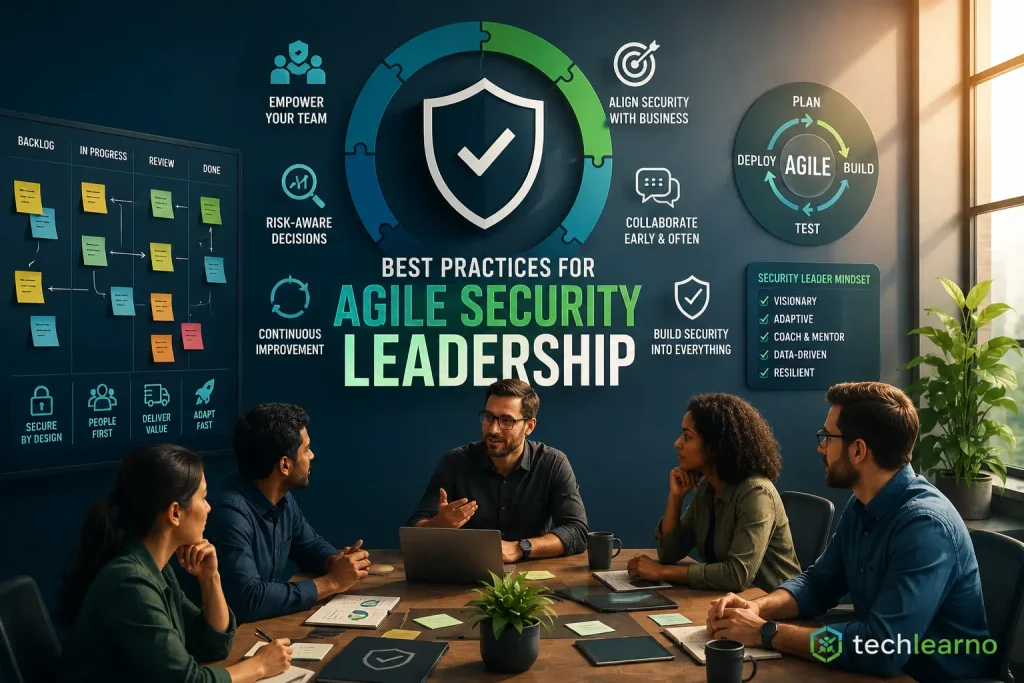
Organizations trying to combine security with agile technology practices can follow several principles.
- Introduce security requirements early.
- Make security a shared responsibility.
- Prioritize risks instead of treating every issue equally.
- Automate repeatable security checks where appropriate.
- Review access permissions regularly.
- Maintain visibility through logging and monitoring.
- Test security controls continuously.
- Include security in development discussions.
- Document important decisions.
- Learn from incidents and near misses.
- Update security processes as technology changes.
- Provide ongoing security awareness.
- Measure meaningful security outcomes.
These practices help create a security culture instead of relying entirely on individual security tools.
Mistakes Future Security Leaders Should Avoid
Technical knowledge is important, but several habits can limit professional growth.
Focusing Only on Tools
Tools change regularly.
Concepts such as networking, risk, identity, access, vulnerabilities, and incident response remain valuable even as particular products change.
Ignoring Business Impact
A vulnerability is important because of the risk it creates, not simply because a scanner labels it as severe.
Treating Security as Someone Else’s Job
Modern security is collaborative.
Developers, administrators, cloud teams, business users, managers, and security specialists all influence an organization’s security posture.
Memorizing Without Practicing
Cybersecurity knowledge becomes more useful when learners understand how concepts behave in realistic scenarios.
Stopping After Initial Training
Cybersecurity requires ongoing learning because technology, vulnerabilities, attack techniques, and defensive methods continue to evolve.
From Cybersecurity Learner to Security IT Leader
Becoming a security leader usually happens progressively.
A practical development path may look like:
Stage 1: Foundations
Learn IT, networking, operating systems, and security basics.
Stage 2: Practical Skills
Work with logs, vulnerabilities, permissions, networks, cloud environments, and security tools.
Stage 3: Specialization
Develop deeper skills in a particular cybersecurity discipline.
Stage 4: Business Understanding
Learn how technical risks affect operations, customers, data, finances, and organizational objectives.
Stage 5: Leadership
Develop communication, prioritization, mentoring, planning, and decision-making abilities.
Technical expertise creates credibility, while business understanding and communication help professionals move into leadership positions.
Future of Agile Cybersecurity Leadership
Security teams are increasingly expected to work closely with software development, cloud infrastructure, automation, and business operations.
This makes adaptability an important professional skill.
Future security leaders will need to understand not only how to block threats but also how to help organizations build technology securely from the beginning.
Important areas for continued development include:
- Cloud security
- Identity security
- Application security
- DevSecOps
- Security automation
- Threat intelligence
- Incident response
- Data security
- Zero-trust principles
- AI-related security risks
- Risk management
The tools used in cybersecurity will continue changing, but professionals with strong technical foundations and problem-solving skills will be better prepared to adapt.
Frequently Asked Questions
What does security IT leadership mean?
Security IT leadership involves guiding the protection of an organization’s technology, systems, networks, applications, and data while aligning cybersecurity decisions with business priorities.
What is agile cybersecurity?
Agile cybersecurity integrates security activities into ongoing development and IT processes so risks can be identified, prioritized, and addressed continuously instead of waiting until the end of a project.
Is cybersecurity only for technical professionals?
Cybersecurity contains highly technical roles, but the field also includes risk management, governance, compliance, auditing, training, policy, and leadership positions.
What skills should a beginner learn for cybersecurity?
Beginners should start with computer fundamentals, networking, operating systems, basic cloud concepts, common threats, authentication, access control, vulnerabilities, and security monitoring.
Why is networking important in cybersecurity?
Network knowledge helps professionals understand how devices and systems communicate, how traffic flows, where attacks may occur, and how network security controls can reduce risk.
What is the difference between cybersecurity and IT security?
The terms overlap heavily. IT security traditionally focuses on protecting information technology systems and data, while cybersecurity can cover a broader range of digital threats, connected systems, applications, networks, and online activities.
What is DevSecOps?
DevSecOps is an approach that integrates security into development and operations workflows so security checks and responsibilities exist throughout the software lifecycle.
Conclusion
The relationship between cybersecurity, agile technology, and IT leadership is becoming increasingly important as organizations depend more heavily on digital systems.
Modern security IT leaders need much more than knowledge of individual security tools. They need to understand networks, cloud systems, vulnerabilities, identity, incident response, risk management, secure development, and the business consequences of technical decisions.
For users researching security it leaders agile it tech agileittech.com, cybersecurity education can be viewed as the beginning of a broader professional journey. Training can help build the foundation, while practical experience, continuous learning, communication, and strategic thinking help transform technical knowledge into long-term cybersecurity leadership.
The strongest security professionals are not simply those who know how to identify threats. They understand how technology works, why risks matter, how teams can respond effectively, and how security can support innovation without becoming an afterthought.
