
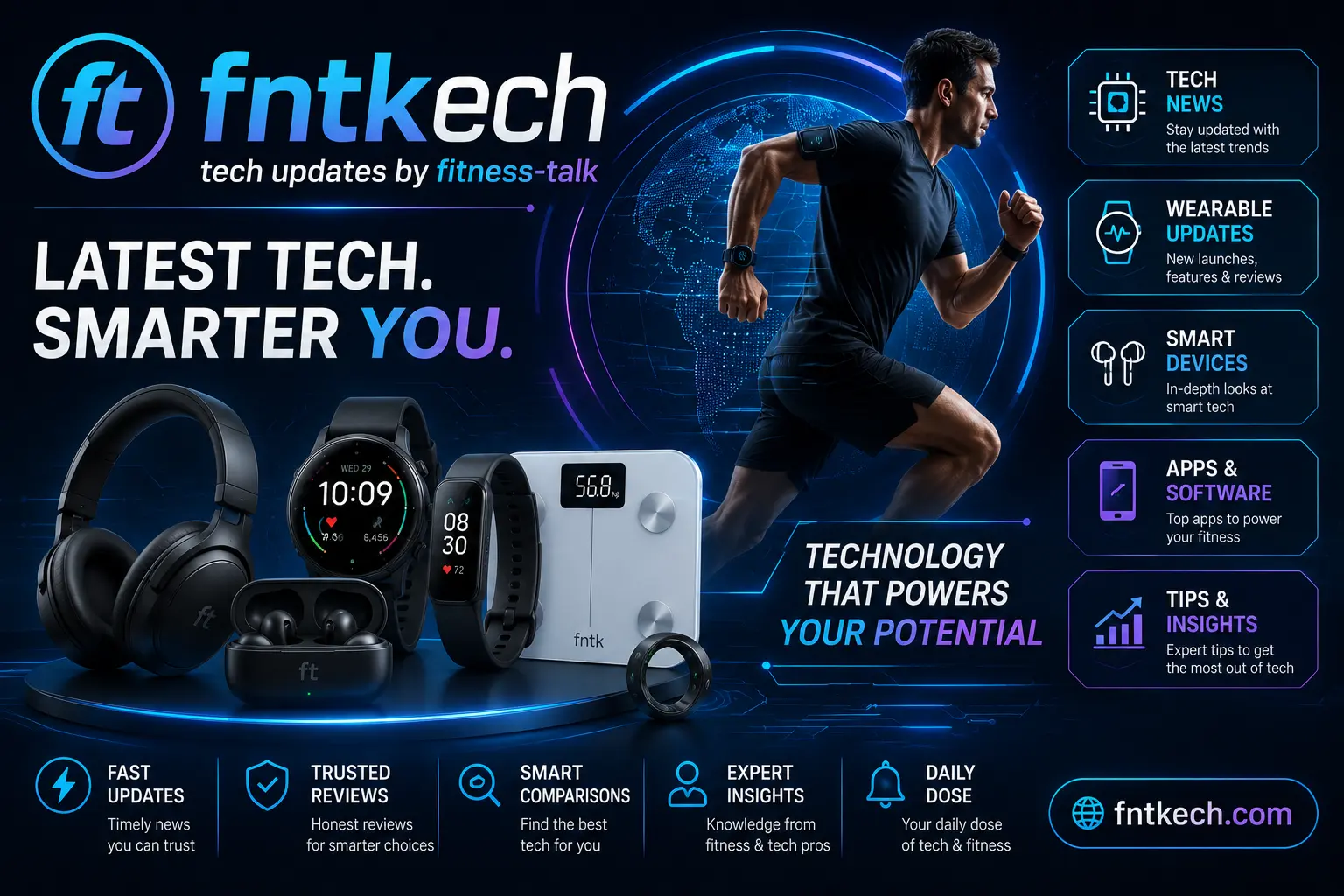
Fitness technology has moved far beyond basic step counters and simple calorie estimates. Today, smart devices can monitor workouts, analyze recovery, track sleep patterns, provide real-time coaching, and help users understand how their daily habits affect performance.
People searching for fntkech tech updates by fitness-talk are generally interested in the intersection of fitness, technology, wearable devices, smart workout equipment, and digital health tools. The most important change is not simply that more gadgets are available. It is that fitness technology is becoming more personalized and connected.
Instead of only recording what happened during a workout, modern fitness technology increasingly helps users understand what that information means and how they can use it.
What Is Fntkech Tech Updates by Fitness-Talk?
The phrase fntkech tech updates by fitness-talk is associated with information about emerging technology, smart fitness devices, workout applications, connected exercise equipment, and digital tools designed to support healthier routines.
The topic covers several areas of modern fitness technology, including:
- Wearable fitness technology
- Smartwatches and fitness trackers
- Smart rings and compact sensors
- AI-powered fitness applications
- Smart home gym equipment
- Heart rate and recovery tracking
- Sleep monitoring
- Connected fitness platforms
- Virtual and augmented reality workouts
- Digital personal coaching
- Biometric sensors
- Workout data analysis
The goal of these technologies is not simply to make exercise more complicated. The most useful tools make fitness information easier to understand and help people make better decisions about training, recovery, and consistency.
How Fitness Technology Has Changed
Early fitness technology mainly focused on collecting simple numbers.
A pedometer counted steps. A basic heart rate monitor displayed heart rate. A treadmill showed speed, distance, and estimated calories.
Modern smart fitness devices work differently.
They can collect information across the entire day and combine multiple measurements to create a broader view of activity and recovery.
For example, a modern fitness platform may consider:
- Daily movement
- Exercise duration
- Workout intensity
- Resting heart rate
- Heart rate trends
- Sleep duration
- Sleep consistency
- Training frequency
- Recovery patterns
- Stress-related signals
Instead of showing isolated numbers, software can organize these measurements into understandable trends.
That shift from data collection to useful interpretation is one of the biggest developments in fitness technology.
Wearable Fitness Technology Is Becoming More Useful
Wearables remain one of the largest areas covered by fitness technology updates.
Smartwatches and fitness trackers were once purchased mainly to count steps. Today’s devices can support a much wider range of activities.
Better Workout Tracking
Modern wearable fitness technology can recognize or record activities such as:
- Walking
- Running
- Cycling
- Swimming
- Strength training
- Hiking
- Indoor cardio
- High-intensity workouts
- General daily movement
The advantage is convenience. Users do not necessarily need to manually record every part of their training routine.
Workout histories can also make it easier to identify long-term patterns rather than judging progress from a single session.
Heart Rate Monitoring
Heart rate tracking can help users understand workout intensity.
Instead of guessing whether a session was easy, moderate, or demanding, users can compare their effort across different workouts.
This is particularly helpful for people following structured cardio or endurance programs.
However, wearable readings should still be viewed as consumer fitness information rather than automatic medical diagnoses.
Recovery Tracking
Recovery has become a major focus of smart fitness devices.
Rather than encouraging users to exercise harder every day, many platforms now try to identify when additional recovery may be useful.
They may consider information such as:
- Recent workout load
- Sleep
- Resting heart rate
- Heart rate variability
- Activity history
- Recovery trends
This approach can encourage a more balanced relationship with exercise.
Smart Rings Are Expanding Fitness Tracking Beyond the Wrist
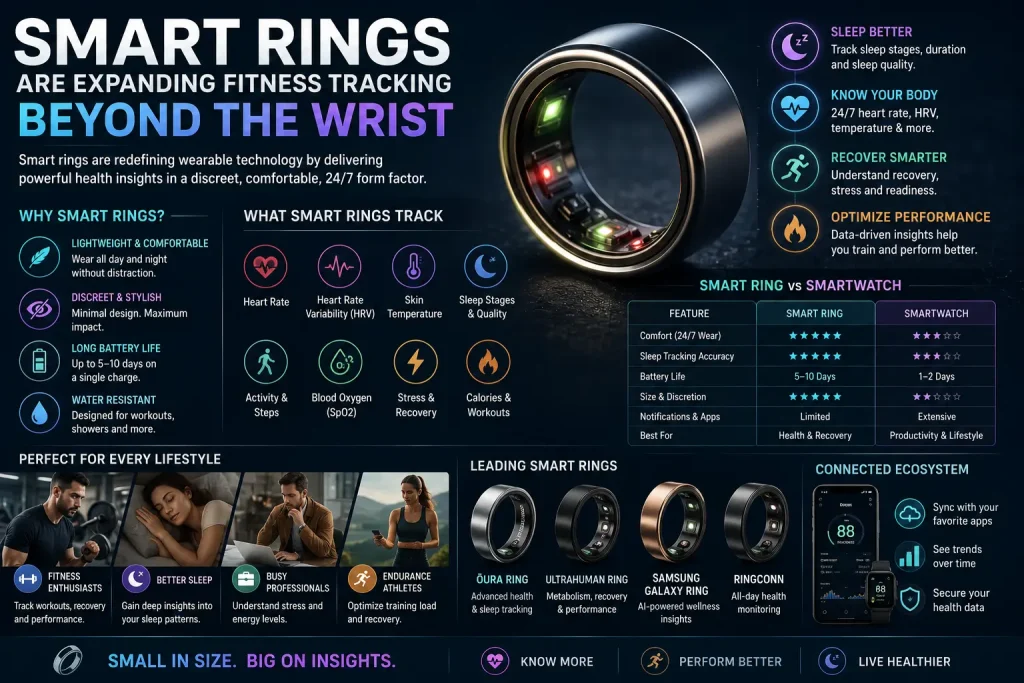
Not everyone wants to wear a smartwatch throughout the day or while sleeping.
That has increased interest in smart rings and other compact wearable devices.
Smart rings generally focus heavily on passive monitoring. Because they are small and do not depend on large screens, many users find them convenient for overnight or continuous tracking.
Depending on the device, tracked information may include:
- Sleep
- Resting heart rate
- Daily movement
- Heart rate variability
- Temperature trends
- Recovery patterns
Smart rings and smartwatches are not necessarily competitors in every situation.
A sports-focused watch may be better for someone who wants detailed workout information during exercise. A ring may appeal more to someone interested in passive wellness and recovery tracking.
Smartwatch vs Smart Ring vs Traditional Fitness Tracker
| Feature | Smartwatch | Smart Ring | Traditional Fitness Tracker |
|---|---|---|---|
| Daily activity tracking | Excellent | Good | Good |
| Workout information | Excellent | Moderate | Good |
| Sleep tracking | Good | Excellent | Good |
| On-device display | Yes | Usually no | Usually yes |
| Notifications | Extensive | Limited | Basic |
| Recovery tracking | Strong | Strong | Varies |
| Comfort during sleep | Moderate | High | Moderate |
| Smartphone dependence | Moderate | High | Moderate |
| Best suited for | Active training and everyday use | Recovery and passive monitoring | Basic fitness tracking |
The best option depends on the person using it. More features do not automatically make a device more useful.
AI Fitness Coaching Is Changing Workout Apps
Artificial intelligence is becoming increasingly important in digital fitness.
Traditional workout applications often give everyone a similar training plan.
AI fitness apps can take a more adaptive approach.
A digital fitness system may use information about previous workouts, available equipment, training goals, and recent activity to change future recommendations.
Personalized Workout Recommendations
Instead of following exactly the same routine every week, users may receive training recommendations based on their recent performance.
For example, a workout platform could adjust:
- Exercise selection
- Number of repetitions
- Training volume
- Workout difficulty
- Rest periods
- Exercise frequency
The real value of AI fitness coaching is not generating endless workouts. It is helping users find an appropriate next step.
Real-Time Workout Feedback
Some connected fitness systems can provide feedback while a person exercises.
Depending on the equipment and software, feedback may involve:
- Exercise pace
- Repetition counting
- Range of motion
- Workout intensity
- Movement consistency
Computer vision and motion sensors are also creating new possibilities for digital form analysis.
These systems can be useful educational tools, but they should not be treated as perfect replacements for qualified coaches, physical therapists, or medical professionals when expert assessment is needed.
Smart Home Gym Equipment Is Becoming More Interactive
Home fitness technology has changed significantly.
A traditional home gym might contain dumbbells, a bench, resistance bands, or cardio equipment.
Connected fitness adds software and digital feedback to the experience.
Smart home gym equipment may offer:
- Guided workout sessions
- Digital resistance
- Automatic workout logging
- Rep counting
- Progress tracking
- Trainer-led sessions
- Personalized programs
- Performance history
One major benefit is organization.
Instead of remembering every weight and repetition from the previous workout, the system can maintain a training record automatically.
Space-Saving Fitness Technology
Compact exercise equipment is another important development.
People living in apartments or smaller homes may not have enough room for a traditional gym setup.
Manufacturers are therefore combining multiple exercises into smaller systems and designing equipment that can fold, mount on walls, or occupy less permanent space.
Technology does not remove the need for physical resistance or movement, but it can make a home setup more practical.
Fitness Apps Are Becoming Central Hubs
Hardware receives much of the attention, but software is what makes many fitness devices useful.
Without good software, wearable data can quickly become a collection of numbers that users rarely check.
Modern fitness apps increasingly bring multiple areas together.
A single fitness ecosystem may contain:
- Workout history
- Activity tracking
- Sleep information
- Recovery data
- Nutrition information
- Goals
- Training plans
- Progress charts
This helps users look for relationships between different behaviors.
For example, consistently poor sleep might occur alongside weaker workouts. A sudden increase in training volume could be followed by several low-energy days.
Technology cannot explain every change in the human body, but organized data can help users notice patterns they might otherwise miss.
Connected Fitness Is Becoming More Important
One of the less visible changes in fitness technology is improved connectivity between devices and applications.
Users may own a smartwatch from one company, use a nutrition application from another, and follow workouts through a separate fitness service.
A useful digital fitness setup allows relevant information to move between compatible services rather than trapping everything inside separate applications.
Before choosing a fitness device, users should therefore look beyond the hardware.
Compatibility matters.
A technically impressive wearable can become frustrating if it does not work properly with the applications a person already uses.
Virtual Reality and Gamification Are Making Exercise More Engaging
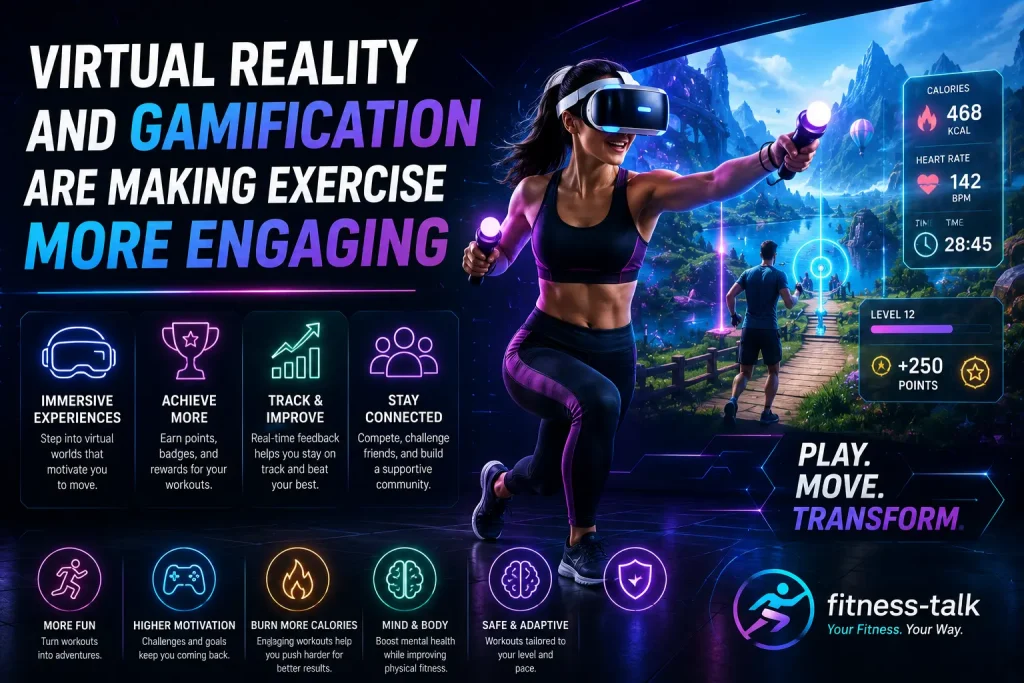
Not everyone enjoys conventional gym workouts.
For some people, the biggest fitness problem is not access to exercise. It is maintaining enough motivation to continue.
Gamified fitness tries to solve that problem.
Workout platforms can introduce:
- Challenges
- Points
- Progress levels
- Leaderboards
- Virtual competitions
- Achievement systems
- Interactive environments
Virtual reality fitness takes the idea further by turning physical movement into part of a digital experience.
A VR workout might involve boxing, dancing, striking targets, or moving through an interactive environment.
These experiences will not appeal to everyone, but they show an important trend: technology is trying to make physical activity more engaging rather than simply measuring it.
Fitness Technology Comparison
| Technology | Main Purpose | Key Advantage | Possible Limitation |
|---|---|---|---|
| Fitness tracker | Activity monitoring | Simple and affordable | Limited advanced features |
| Smartwatch | Fitness plus everyday smart features | Versatile | Can be distracting |
| Smart ring | Passive health and recovery tracking | Small and comfortable | Limited workout display |
| AI fitness app | Personalized training | Adaptive recommendations | Quality depends on data and software |
| Smart gym equipment | Interactive home training | Automated workout tracking | Higher cost |
| VR fitness | Interactive exercise | Engaging experience | Requires compatible equipment |
| Connected fitness platform | Combines fitness information | Better overview of progress | Compatibility can vary |
Data Accuracy Matters More Than Extra Features
Fitness technology companies compete by adding more measurements, dashboards, and scores.
But more information is not always better information.
A user should ask a simple question:
Can I actually make a useful decision from this measurement?
If the answer is no, the feature may not provide much value.
Consumer wearables also have limitations. Readings can vary because of device placement, movement, sensor quality, environment, individual physiology, and other factors.
The best approach is usually to focus on long-term patterns rather than becoming concerned about every small daily change.
Privacy Is an Important Part of Smart Fitness
Modern fitness devices can collect significant amounts of personal information.
Depending on the device, that information may include activity history, sleep patterns, heart rate, location, workout routines, and other health-related measurements.
Before using a connected fitness service, users should understand:
- What information the device collects
- Which permissions the application requests
- Whether location tracking is necessary
- How account security works
- Whether information can be shared with other services
- Which third-party applications are connected
- How account information can be deleted or exported
Privacy should be considered before purchasing a device, not after months of personal data have already been collected.
Subscription Costs Can Change the Real Price
The purchase price does not always represent the full cost of smart fitness technology.
Some connected devices provide their most useful features only through paid subscriptions.
A subscription may unlock:
- Advanced analytics
- Personalized workouts
- Coaching
- Training programs
- Recovery insights
- Premium classes
- Historical reports
Before purchasing expensive fitness equipment, users should calculate the cost of owning it over several years.
A cheaper device with an expensive mandatory subscription may eventually cost more than a higher-priced alternative with fewer recurring fees.
How to Choose the Right Fitness Technology
The best fitness device is not necessarily the newest or most expensive.
Start with the problem you are trying to solve.
Choose Based on Your Goal
For general activity awareness, a simple fitness tracker may be enough.
For runners or cyclists, workout data and battery performance may matter more.
For recovery-focused users, sleep and passive monitoring may be priorities.
For home training, connected strength equipment or an AI fitness application could provide more value.
Check Compatibility
Before purchasing a device, check whether it works with your:
- Smartphone
- Preferred fitness apps
- Existing wearable
- Nutrition platform
- Training software
- Other connected equipment
A connected ecosystem is most valuable when its components can communicate.
Consider Long-Term Cost
Look beyond the initial price.
Consider:
- Subscription fees
- Accessories
- Replacement bands
- Premium services
- Equipment maintenance
- Upgrade requirements
Think About What You Will Actually Use
A device with 50 features is not automatically better than one with 10.
If you only need workout tracking, heart rate information, and basic recovery data, paying for dozens of unused features offers little benefit.
Common Mistakes People Make With Fitness Technology
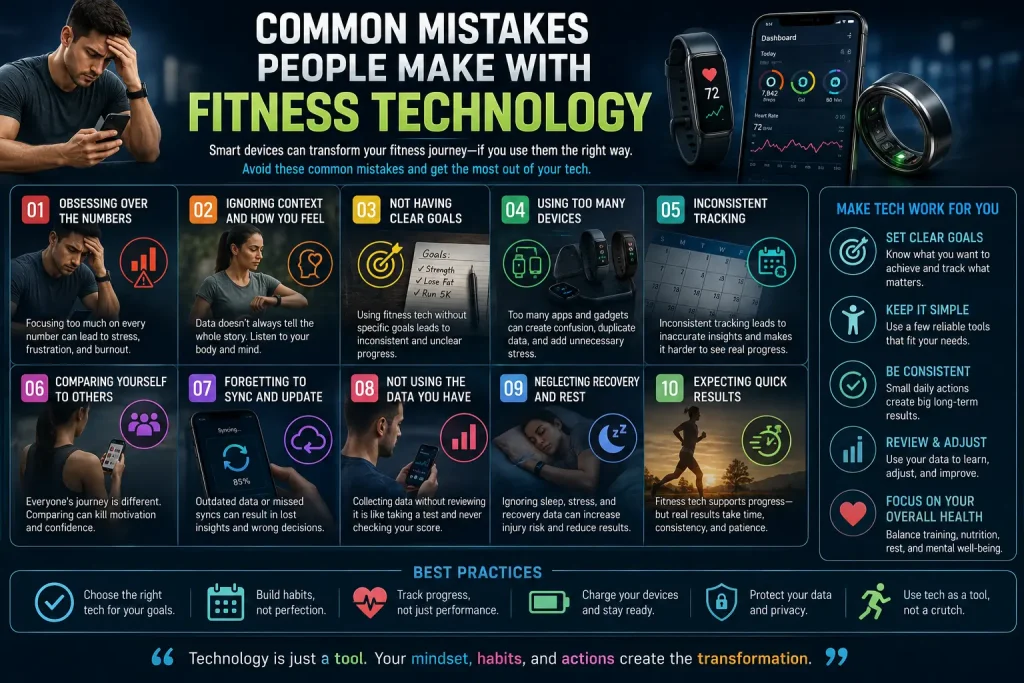
Fitness technology works best when it supports good habits rather than becoming the goal itself.
Common mistakes include:
- Buying devices because they are trending
- Obsessing over individual daily readings
- Ignoring how comfortable a wearable is
- Paying for features that are never used
- Forgetting to check subscription costs
- Assuming every sensor reading is perfectly accurate
- Sharing unnecessary personal information with apps
- Using multiple devices that provide identical information
- Allowing fitness scores to replace how the body actually feels
The purpose of technology should be to simplify fitness decisions.
If a gadget creates more stress than clarity, it may not be helping.
Do You Actually Need Fitness Technology?
Not everyone does.
Walking, running, resistance training, stretching, cycling, and many other forms of exercise existed long before smart devices.
Someone with a consistent exercise routine may receive little additional benefit from an expensive collection of gadgets.
Fitness technology becomes most valuable when it solves a specific problem.
For example, it may help someone who:
- Struggles to stay consistent
- Wants structured workout records
- Needs convenient home workouts
- Enjoys data-driven training
- Wants to monitor recovery trends
- Finds gamification motivating
- Wants progress information in one place
Technology is a tool, not a requirement for becoming fitter.
What Comes Next for Fitness Technology?
The next stage of fitness technology is likely to focus less on adding screens and more on making sensors and software less noticeable.
Several areas are developing rapidly.
Smarter Biometric Sensors
Sensors are becoming smaller and easier to integrate into wearable products.
Future fitness devices may gather useful information without requiring users to manually interact with them throughout the day.
Smart Clothing
Wearable technology does not have to remain attached to the wrist or finger.
Sensors integrated into clothing could support movement analysis, exercise tracking, posture feedback, and other forms of performance monitoring.
More Personalized AI Coaching
AI fitness software will continue moving toward recommendations based on individual behavior rather than generic user categories.
The most valuable systems will likely combine multiple signals while presenting recommendations in a way that remains easy to understand.
Better Device Integration
People do not want five applications showing five different versions of their fitness data.
Better interoperability between wearables, workout applications, exercise equipment, and wellness platforms could make connected fitness significantly more useful.
Greater Focus on Privacy
As fitness technology collects more personal information, privacy and data control will become increasingly important when users compare platforms.
Frequently Asked Questions
Can AI replace a personal fitness trainer?
AI can help generate workouts, analyze activity, track progress, and make basic adjustments. However, it cannot fully replace the observation, judgment, motivation, and individualized expertise that a skilled human professional can provide.
Are smart fitness devices accurate?
Many devices are useful for general fitness tracking and long-term trends, but consumer wearables can have measurement limitations. Users should avoid treating every reading as a precise medical assessment.
Is expensive fitness technology necessary for better results?
No. Exercise consistency, appropriate training, recovery, nutrition, and sustainable habits remain more important than owning expensive equipment. Technology is most valuable when it helps users maintain or improve those behaviors.
What should I check before buying a wearable fitness device?
Consider comfort, battery life, workout features, app quality, smartphone compatibility, privacy settings, subscription costs, and whether the information provided will actually support your fitness goals.
Are smart rings better than smartwatches?
Neither option is automatically better. Smart rings can be convenient for passive tracking and sleep monitoring, while smartwatches typically offer stronger workout interfaces, screens, notifications, and broader smart features.
Why is privacy important with fitness apps?
Fitness applications can collect sensitive information about daily activity, location, sleep, routines, and health-related measurements. Reviewing permissions and privacy controls helps users reduce unnecessary data sharing.
What does fntkech tech updates by fitness-talk cover?
Fntkech tech updates by fitness-talk is associated with information about fitness technology, wearable devices, smart workout equipment, fitness applications, AI coaching, recovery tracking, and other developments connecting technology with exercise.
Conclusion
Fntkech tech updates by fitness-talk reflects a broader change taking place across the fitness industry. Technology is moving from simple activity counting toward connected systems that can organize workout information, monitor recovery patterns, personalize training, and make exercise more interactive.
Wearables, smart rings, AI fitness apps, connected home gyms, biometric sensors, and virtual workouts all have useful applications, but none of them automatically creates better fitness results.
The most valuable technology is the technology that solves a real problem. It should help you understand your habits, make better training decisions, stay consistent, or simplify the way you track progress.
Instead of chasing every new fitness gadget, choose tools that fit naturally into your routine. When technology supports exercise rather than distracting from it, smart fitness becomes genuinely useful.
